Sunday, April 19, 2015

Time Well Spent

To A Job Well Done! 
 Congratulations on Your Accomplishment!

As we come to the end of an amazing journey I reflect on the learning that resonated with me and I will carry on throughout my career.

 Being not only culturally aware but being culturally responsive is crucial when working with children and families.  One's culture is intertwined into one's identity. 
 
The field of early childhood education requires working in collaboration with many that share the same passion, vision, and mission.  "Alone we can do so little; together we can do so much".  Helen Keller
 
Self-reflection is a powerful tool in which we can grown and learn from.  As early childhood educators we must reflect on our practices to ensure the work we are doing serves the best interest of children and families.
 
Being open to various perspectives allows for all voices to be heard.  It allows for the development of understanding and growth to occur.
 
Evaluating the consequences of an idea, project, proposal, or program provides opportunities to identity what we what to achieve as well as what we do not want to achieve.  This allows for proactive and careful planning to occur in order to achieve the desired outcomes. 


After completing this program I have the knowledge and skill set to achieve my long-term goals.  While it may not be easy or happen over night, I know what I need to be successful.
 
A long-term goal I have is to put my Capstone Project Challenge into action.  To implement a child development and positive parenting course as a high school graduation requirement.

Another goal I have is to bring developmentally appropriate practices back to all.  Including bringing play-based instruction back to kindergarten.  To bring hands-on and exploratory learning back to all.  To rid our school systems of teaching to the test.  To teach children how to problem solve and to apply their knowledge instead of memorizing and regurgitating facts. 


I want to thank my mom for giving he "motherly push" to start my Master's degree and for the encouragement along the way.  I want to thank the wonderful man in my life for all the support and encouragement along the way and for the understanding of "I have homework to do."  I want to thank my two wonderful daughters for their support and understanding as I balance work, school, and family.  Thank you to my dad for his ongoing support.  A shout out to other family and friends for their support and understanding when I could not attend the fun things going on! 
 
A big thank you goes out to my colleagues.  Many of us started the first class together.  I appreciate your insights, perspectives, and feedback.  I learned so much from your discussion posts and blogs.  I appreciate your honesty as we shared the good and difficult experiences both in our professional lives and in our private lives.  These experiences shaped who we are and I value each of you!  I wish you well as we move on to future endeavors!  I know each of you will be very successful and make positive impacts on children and families!
 
I would like to thank all my instructors that I have had the pleasure to work with.  It has been a wonderful learning experience. 
 
 
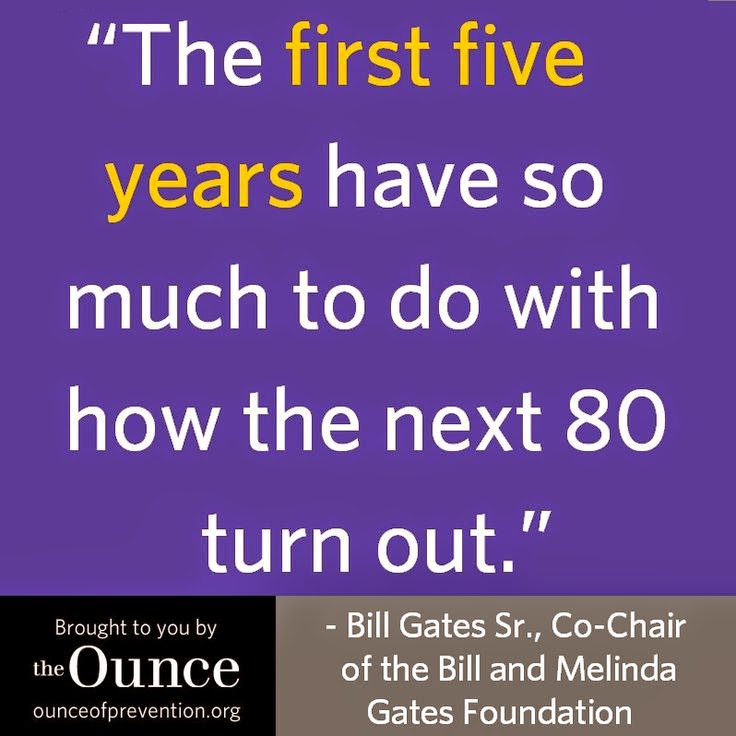
I leave my final thoughts with images and quotes below in regards to the field of early childhood education:


Monday, April 6, 2015

Jobs/Roles in the ECE Community: Internationally

 
Global Partnership for Education
 
I found this organization to be very interesting as it demonstrates partnerships among a variety of practices.  It is the ultimate community of practice.  The organization works in partnership with many to assist developing countries in developing educational programs to meet their priorities.  Global Partnership for Education assists in helping governments develop their educational plans as well as working with partners to assist with finding financial resources or grants. Part of the plan is to monitor and measure outcomes.  The efforts are completed in a collaborative effort with a team consisting of members of the countries’ government, the private sector and private foundations that support education efforts, community organizations, teacher organizations, and those working in the education field.  The goal of the organization is to provide access to education to all, to reach every child with a focus of reaching girls and children with disabilities, have child learn and master necessary skills, and to build an educational system that will support the future. 
A job that was posted through the website was with partnership with World Bank.  The position is Senior Country Education Specialist.   The Senior Country Education Specialists represent the Secretariat at Country Level. They are each in charge of a portfolio of countries where they promote the Partnership goals and facilitate its processes (Global Partnership for Education, 2015).  Duties include developing knowledge of the education sector in assigned countries to identify barriers and solutions for reaching international education goals.  To support governments in the development, implementation and monitoring of education sector plan.  Assist in leveraging international financial and technical support at country level.  Participating in thematic working groups in collaboration with the Strategic Policy and Performance team.  To contribute to thematic work related to the Strategic Goals and Objectives of the Global Partnership.  Develop and strengthen the Partnership’s operational modalities.  Qualifications include a Master’s degree in education, economics, international development or related field.  Eight years of relevant experience with a minimum of three years working in developing countries.  Expertise in one or more of the following areas: education planning, finance and management of education systems, teacher development, girls’ education, inclusive education, and other areas relevant to the work of the Global Partnership.  Ability to work both independently and effectively in teams.   Frequent travel requires.
For more information visit the website:  http://www.globalpartnership.org/
Reference:
Global Partnership for Education. (2015). Job description, senior country specialist. Retrieve from:
http://www.globalpartnership.org/
  
  
Association for Childhood Education International (ACEI)
I chose this organization because it views education and well-being of children whether they are in their home, school, or in the community as an inherent right.  The organization strives for quality programs and practices for children from infancy through early adolescence. To increase preparation standards for those involved with the care and development of children. To promote continuous professional growth of educators. They view each child as an individual with their own abilities, gifts, and talents.  They believe in equity for all children.  To be in an environment free of bias.  The organization’s website offers numerous resources and provides information for programs and events. Resources include topics on early childhood education, professional development, research, advocacy, and a variety of publications.   
I did not see any job postings.  However the organization offers internships and volunteer opportunities.  Requirements for interns are to be enrolled in a graduate program that focuses on global issues with a particular interest in children’s education.  The internship run eight to twelve weeks.  Interns must live in the Washington, D.C. area.  ACEI does not have a formal volunteer placement program.  Members participate with ACEI by selecting critical projects and initiatives that support the mission and support children's development and well-being. Volunteers are able to decide how and where to volunteer.   Many look to volunteer in their own communities.
For more information visit the website:  http://www.acei.org/

 
 Read more about the European Early Childhood Education Research Journal (EECERJ)
 
European Early Childhood Education Research Journal (EECERJ)
European Early Childhood Education Research Journal is an organization that promotes and distributes research on a variety of early childhood disciplines and its applications to policy and practice.  I chose this organization as it operates on the basis of great European theorists such as Vygotsky and Piaget.  I also chose this organization because I thought it was interesting that it run by voluntarily efforts and owned by its members.  It is administered under the protocols of a charity with Board of Trustees elected by an Electoral College.  EECERJ publishes the only European early childhood journal cited in the prestigious Social Science Citation Index (SSCI). The SSCI identifies scholarship from across 50 disciplines including 'education'. Only the world's leading social sciences journals are selected for inclusion in the index. The SSCI includes only four journals with an early years' focus, and of these four, only one is produced in Europe (EECERJ, 2015).  This organization sponsors conferences, allows for the opportunities to form a special interest group, offers membership and allows access to research journals and newsletters.  The organization has over 35 country coordinators that work to increase the national participation and activity of EECERA members in the Country Coordinator's country or region; raise the visibility, status and impact of the EECERA in each country; create an EECERA supported international network of EC researchers, practitioners and policy makers and to be an intermediary for local EC colleagues to EECERA and its journal (EECERJ, 2015). 
For more information visit the website:  http://www.eecera.org/
Reference: 
European Early Childhood Education Research Journal. (2015). Homepage. Retrieved from:
                http://www.eecera.org/
               

Tuesday, March 24, 2015

Jobs-Roles in the ECE Community: National and Federal Level


I chose New America Foundation as one of the national organizations-community of practice because it supports public policy and is committed to finding solutions to various issues. Finding of solutions requires efforts of public, private and civic sectors working together.  The organization assists on finding solutions at the state, federal, and international level. Also by focusing on creating diverse thinkers, the organization relies on researchers and writers as well as looking to bridge technology, policy and academia by creating,  testing and piloting new technologies and integrating them into solutions.  The success of this organization requires collaboration within in many fields and the willingness to take risk and find out of the box solutions to many issues facing us today. 

There are various job opportunities within various departments of the organization.  One that caught my attention was the Policy Analyst for Education.  This position will entail researching and reporting on federal education policies pertaining to early childhood through higher education as well as the workforce of the Departments of Health, Education and Human Services with a focus on budget and finance.  The position  requires analysis of qualitative and quantitative data. The requirements of this position include a Bachelor's degree, Master's degree in field related to public policy or economics.  Ability to take feedback and work in collaboration as well as being well organized. 

For more information visit the website: www.newamerica.org


I chose the National Association of the Education of Young Children (NAEYC) as a national organization-community of practice because NAEYC is one of the leading organizations on early childhood education.  Experts affiliated with this organization have the knowledge, know of or have completed research and developed best practices on various topics that support child development.  Topics include attachment, child development and milestones, developmentally appropriate practices, curriculum and assessment,  inclusion, health and wellness, parent education and engagement, teacher education and credentials, accreditation standards and quality and so much more.  The organization provides numerous resources to all that are invested in early childhood.   
 
Job opportunities that caught my attention were 1)  Senior Director, NAEYC Academy of Early Childhood Program Accreditation. The position entails keeping the NAEYC standards as the Gold Standard of Excellence.  Ensuring the support of quality improvement and providing reliable and valid assessment of quality.  Works with states and other systems to form partnerships that utilize NAEYC accreditation as a cost-effective way to improve early childhood programs.  Requirements include an advanced degree in nonprofit management, business administration and/or early childhood education/child development.  Excellent organizational, communication, and interpersonal skill; strong conceptual and analytic skills and talent for innovation. 2) Early Childhood Systems Technical Assistance Expert, State Preschool Development Grants.  The position entails providing and managing technical assistance (TA) to Preschool Development Grant grantees states and focusing on ensuring high-quality preschool programs, expanding high-quality preschool programs in high-need communities, collaborating and supporting subgrantees, building professional development systems, and aligning curriculum.  Requirements include Master's degree in early childhood education, child development, child psychology, education or related field. Experience with cross-sector early childhood systems, policies,  and regulations.  Expertise in preschool content areas to include providing TA, direct implementation of programs and policies.  Providing presentations, developing publications.  Experience working with multiple stakeholder groups as content advisor, participant, or TA provider. 
 
For more information visit the website: www.naeyc.org/


I chose Zero to Three as a national organization-community of practice because this organization focuses on providing professional, parents, and policy makers with the knowledge, information that is founded on research and evidenced based practices to support the development of children starting at birth. Zero to Three develops, funds, and support various projects to support families and professionals.  This organization has a policy center in which research based resources are shared with advocates, policy makers at the state and federal level in regards to the developmental needs of infants and toddlers. 
 
Job opportunities that caught my attention were 1) Senior Training Specialist.  The position entails being responsible for project activities including but not limited to content development, training, and facilitation pertaining to The Prenatal Through Age Five Workforce Development Project. Requirements include Master's degree in social work, counseling, psychology, special education, early childhood education or related field. Maintains an acceptable and respectful approach to others.
Is self-reflective and empathic.  Encourages and practices critical thinking.  2) Senior Research Analyst. The position entails supporting research and evaluation projects throughout the organization.
Including the complete research process to include development, implementation and final report. 
 Requirements include a Master's degree in program evaluation or in a field of applied social science research. Strong knowledge of program evaluation and research methods. Ability to communicate effectively both written and verbally to various audiences.  Strong interpersonal skills with ability to explain complex information in  a simplified format.

For more information visit the website:  www.zerotothree.org


Thursday, March 12, 2015

Exploring Roles in the ECE Community: Local and State Levels

Smart Beginnings is an organization that appealed to me because I believe in their motto "Ready for School. Ready for Life."  Smart Beginnings is an organization that is designed to support state initiatives within the field of early childhood development and education.  The organization also has regional programs that supports a group of local communities across the state.  The state's star quality improvement initiative is supported by Smart Beginnings.  The be a quality rater or mentor one would need to have the knowledge of early childhood education, development, and practices.  Specific training is required for each position.  Trainings are focused on the observation tools that are used to determine the rating.  The tools that are used is CLASS, and ECERS.  Depending on the age of the classroom the appropriate observation tool is used.  Smart Beginnings offers resources for parents.  Smart Beginnings also offers community members to be part of the organization by participating on various committees.  To be a member of a committee one must value and support the overall healthy development of children to ensure each child is "Ready for School. Ready for Life".  For more information visit the Smart Beginnings website:  http://smartbeginnings.org/

I chose Voices for Virginia's Children as an organization that appeals to me because they focus on advocacy to ensure the children are Virginia have a voice and ensure the programs are in place and funded in order to support and provide children across the state with the resources and services they need in order to learn and grow in order to reach their full potential.  This organization keeps communities and programs within those communities abreast of legislative changes that impact children. This organization lobbies for change by supporting new initiatives and bills that make positive impacts in communities across the state.  They all lobby in order to  protect programs from cuts or policies changes that could have negative impacts on communities across the state.  To work with this organization one will need to have knowledge of various content areas that support children's health and development.  The knowledge of the legislative process would be needed in order to advocate in the most effective manner.  For more information visit Voices for Virginia's Children website: http://vakids.org/
 
 I chose the Virginia Head Start Association, Inc. as an organization that appeals to me because I worked with Head Start for 12 years.  Through my work with Head Start I have developed a wonderful network of colleagues that provide support  for the mission of providing high quality services for children and families.  Head Start is inclusive of providing comprehensive services to children and families.  Head Start supports professional development for all staff.  Head Start has a strong commitment to community partners.  Those that share the passion of providing quality services to at risk children are able to join the work of Head Start. Head Start has provided what I believe is the ultimate model of how to support early childhood education and development.   Even though I have moved on in my career I still rely on my network within the Head Start community.  The mission of my current program is to support children and families that are not able to attend Head Start because of limited slots.  Therefore the Virginia Preschool Initiative is a partner with Head Start within many communities across the state. For more information visit the Virginia Head Start Association's website:  http://headstartva.org/


Friday, October 24, 2014

A Note of Thanks

I want to say thank you to all my colleagues as we complete another milestone in our journey of completing our Master Degrees.  As we come to a fork in the road as we go on our different pathways to embark on our specialties, I wish each of you well and the best in your future endeavors.  I want to thank you all for your perspectives as I gained so much knowledge and insight from your discussion posts as well as your blogs.  We never know when our paths may cross again and would look forward to such opportunities!  The best of luck to everyone!

Friday, October 10, 2014

Adjourning From A Team


There are many stages a team goes through as they conform and work together to achieve their goal.  Each phase may difficult and have its challenges.  Once the goal has been reached it is time for the team to move on and many times the team may dismantle.  This phase of team development may be the hardest of all.  This may happen because new relationships have been formed and while the goal was achieved there could be a bit of a let down as all the build up and hard work has come to an end.  I compare it to the build up of preparing for the holidays, graduations, and weddings where there is months of planning, preparation, excitement and then the day arrives and it is over so quickly.  Many times there is a sadness within the celebrations because it is over.  Many times these events are the center of our world for a long period of time and with a blink of an eye it is over.

 As I mentioned in the second discussion for this week, I recently left a job.  While my boss at the time demonstrated poor leadership as she had no trust and this caused issues throughout the work environment I had the bitter-sweet feeling when I left.  While the overall team in which included the boss was dysfunctional, the team ran quite effectively without her and with that I was sad.  I had a great working relationship and well as a true friendship with my co-workers.  We all shared the passion and the vision of providing the highest quality of services to children and families and we supported each other.  We also grew to know and respect each and became friends.  We all helped each other through many times, good and bad.  This group of women are truly amazing and I found it difficult to leave even though I was moving on to a wonderful opportunity.  So the group of us did go to dinner together to say good-bye.  However it was a good-bye from working together but not a good-bye as in staying in touch and meeting up from time to time and we did just that as we came together to celebrate one of the member's wedding.


As we embark on completing our Master's Degree in the near future I anticipate a bitter-sweet feeling.  As I will find it sweet to accomplish my degree and to put all the hours of work behind me.  It will be an adjustment of not having to do work as it part of my routine but I think  I will get over it rather quickly.   I find the bitter to be not being able to read the insight from my colleagues as they have provided such a wealth of knowledge and I have valued their insight.  As well as put their personal sides out there, they have been a big part of my life for a year and a half.  While I have not met them in person we have a connection and they have supported me throughout this journey. 


I think adjourning is an essential stage of teamwork because a successful team in many ways becomes a family during the time of working together to achieve the goal and there is a need to say good-bye or have a closing celebration.    As with family you have your ups and downs however trusting relationships are able to navigate through both smooth and rough waters.  I think as teams adjourn it is necessary to have a ritual or celebration to knowledge all the work and success of the team or have time to reflect.  It is also important to have the opportunity to say good-bye and have closure. 


Saturday, October 4, 2014

Nonviolent Communication Skills

When dealing with a recent conflict involves very close friends of mine who are in the middle of a divorce.  My children and their children grew up together and we are like family.  They both were there for me and my girls when I went through a nasty divorce.  I find myself  not wanting to take sides and trying to stay out of the middle while maintaining friendships with both of them. I feel I cannot go into details but I now know it is ok to not take side and stay neutral.   I can choose to take the third side which is the side of the whole.  The communication strategies I learned this week will assist me with further communication in that I will be able to express myself in a manner as getting a need met instead of it being my want.   I will also be able to utilize the "balcony" where I can step back and take a look and gain a perspective.  This will allow me to proceed in a more effective manner when trying to resolve conflict. 

Friday, September 26, 2014

Who I am as a Communicator?

When completing the communication styles and skills assessments and comparing the assessments from others I found it interesting in how I thought of myself as being a bit more aggressive verbally than my evaluators.  While my assessment and the assessment of others put me in the same category as being moderate with verbal aggressiveness, my number was higher than theirs.  The moderate category describes me as being balanced in regards to being respectful and considering others' view points and arguing fairly by attacking the position and not the person .  I was actually glad that I viewed myself a tad harsher than others did.  While my number was in the moderate range it was at the high end of being moderate and the others rated me as being in the mid-range.  Therefore  I do want to be more aware of my level of aggressiveness while communicating and be on the lower end of moderate.


This week I also gained more insight about how our schemas and myopia really does shape how we judge people just by looking at them.  In turn these judgments and biases impact how we communicate with people.  It is important to remember not to  be so judgmental in order to be more effective communicators.  I also learned how uncomfortable I truly was when being asked to make determinations about someone's life by simply looking at them.  I think this will allow me to not rush to judgment when first meeting someone and will allow me to be open when communicating with people as I work to remove the biases and stereotyping. 

Saturday, September 20, 2014

Communicating Among Diverse Groups

I do communicate differently with various groups of people.  Depending on the relationships and situations in which communication is taking place I interact differently with different groups.  When communicating with my family and friends I use both formal and informal language and at times the language is slang.  I have a deep knowledge of my family and friends and feel I can be more myself in expressing my thoughts and opinions.  When interacting at work I have different relationships with different people therefore my communication will vary depending on those relationships.  Many of my co-workers are friends and many co-workers are just co-workers.  With my friends that are co-workers the topics of conversation are more in depth and go beyond "shop talk" and may go into personal information.  With the co-workers that I have just a professional relationship with the topics are related to "shop talk" and may consist of general small talk but I would not go in depth with personal experiences and such.  Typically conversation with co-workers I use more formal language than informal language.   With people that I have just met I am more mindful of what to say as I do not have the relationship with them yet and will need to establish boundaries in order not to offend them.  With communicating with those that are culturally different than myself it again depends on the relationship.  I have friends that are culturally different from me and I interact with them differently than those that are culturally different from me that I do not know as well.  For me my communication is different based off of the relationship and environment verses just than being culturally different. 

Three strategies I would use to help me communicate more effectively are to put myself in the other person's shoes in order to gain perspective, put aside my own myopia in order to help me gain perspective of others, and last be an active listener.


Friday, September 12, 2014

Communication and Assumptions


I found this assignment to be fun as well as insightful.  The show I chose to watch was VEEP.  It is an HBO original series.  I have heard about the show but never watched it before.  I knew the main character was either the President or the Vice President of the United States but was not sure until I watched the show with the sound on.  While watching the show with the sound off I was able to determine there was some sort of crisis going on.  The characters  facial expressions, hand gestures, and body language were that of frenzy, panic, and concern.  However I was not able to determine the exact context of what the crisis was.  Also I misinterpreted some of the interactions.  Interactions that I thought were in the context of joking around were actually the characters not liking each other so the interactions were such and not meant to be a joke.  I also misinterpreted the relationships between two of the characters.  While the was sound off I thought they might have a romantic relationship going but when the sound was on I found out they were trying to build alliance to keep themselves from getting fired.  While the closeness in sitting next to each and what appeared to be whispering was true the context was incorrect, the two were plotting to save their jobs not flirting or being romantic. 

The aha moment I had was in essence that while body language, facial expressions, and gestures emphasize our verbal language, without being able to listen it is easy to draw the wrong conclusion and misinterpreted the information from body language and facial expressions alone.   You need to be able to listen in order to gain the proper context of what is happening.  This assignment really demonstrated the importance of listening and how without listening how the real context of our messages can get lost.  Listening is key to competent communication.

Saturday, September 6, 2014

Competent Communication

A person that demonstrates competent communication is a co-worker of mine. Her name is Teri.  She is able to express herself as well receive information in a professional manner.  When she speaks she is not only articulate but she also exhibits confidence in how she presents herself.  When she engages in conversations she is respectful and will allow all to express their opinions. She will also ask to clarify something and not jump to conclusions.  What I most admire about her communication skills is that she has integrity.  She does not participate in the workplace gossip and actually handles such very well.  During a meeting in which our boss was being very unprofessional in regards to talking about someone's work performance without that person being present, Teri stated in a very professional and matter of fact manner she was not comfortable discussing issues without the person being present and not being able to speak for themselves.  In essence she put a stop to the gossip during that point and time.  Teri puts into practice the ethical principles of both the National Communication Association and the NAEYC. 
 

Wednesday, August 20, 2014

Professional Hopes and Goals

 
Hopes I have when I think about working with children and families who come from diverse backgrounds is I want the children and families to feel welcome, comfortable, and to know they are respected for who they are regardless of their ethnicity, race, language, sexual orientation, ability level or gender.  I also want them to know the importance of keeping true to themselves; stay true to their own culture and language. My biggest hope is that no child has to experience ridicule or discrimination for who they are or for who their family is, that the day will come when all people are seen as being people.


A goal I would like to set for the early childhood field is that we as educators will start to dismantle the institutionalized -isms in order to diminish the development of internalized privilege and oppression. 


I would like to thank all my classmates for a wonderful learning experience throughout this course.  It has been an enlightening experience.  I have gained much insight and perspective on diversity and especially with the development of self and identity.  I wish you all well as you continue your studies.  We are all another step closer to achieving our ultimate goal...completing our Master's!

Friday, August 15, 2014

Welcoming Families From Around the World

The country in which the new family would be from is Iceland.  I do not know anything about this country other than as a child I was told that Iceland and Greenland are actually the opposite of what their names say.  I always thought that was interesting but never did any research on it. 


The five things I would do to prepare myself to be culturally responsive towards this family are:
  1. I would research the country of Iceland.  Looking to identify significant aspects of the culture and the language spoken.   I would educate myself on religion, traditions, major historical events that have taken place.  I would familiarize myself with various aspects of the culture such as family roles, the educational system, socioeconomic structure, and what people tend to do for a living.
  2. I would learn some key phrases of the language.  As I would be able to greet the family in their language and make them feel welcome. I would also be able to engage the child as well.
  3. I would make sure the facility and the classroom are welcoming in regards to be representative of Iceland with photos, books, and other toys.
  4. I would have the classroom staff in which the child would be assigned also research the country as well as learn some key phrases in which the staff could interact with the child and family in their language. 
  5. When meeting with the family I would ask them if they were comfortable in sharing information about their culture and their own family culture.  I would also engage in conversation and share my understanding of their country from my research and gain their perspective on such.  I would  encourage them to stay true to their culture and the importance of such.  I would definitely ask about what the education system is like and what they can expect here.  I would acknowledge any concerns they may have and reassure them that we will work together in supporting their child during this transition as well as the entire time they are with the program.   I would offer  much support and let them know they are welcome anytime to visit, share about their culture, and express any concerns. 
 
I believe these preparations would benefit both me and the family as it will allow for a trusting relationship to form.  These preparations demonstrate  the desire to engage the family in a manner in which they feel welcome by learning about their country, culture, and language and actually responding to them with what they are familiar and comfortable with. By modeling my openness and responsiveness to the family I think it will allow them to be responsive to me.  By allowing them to share what is meaningful to them will assist with them learning what is meaningful here.   As this is a partnership between the family and me. 

Saturday, August 9, 2014

The Personal Side of Bias, Prejudice, and Oppression

A situation in which I witnessed bias and oppression is an example I gave in my reflective journal during week three for witnessing a child being marginalized.  From new insight and understanding I have gained about sexism and internalized oppression I now see how this child was being treated based on such factors.  I witnessed a young boy playing in the dramatic play center, he was so engaged in his play and appeared to be having fun and enjoying himself.  His father came to pick him up early and his father told him to put the doll down because boys do not play with dolls.  I noticed the boy put his head down and put the doll down.  The boy appeared to be ashamed or embarrassed because his body language and facial expression changed dramatically. While the child was being  marginalized I now understand that through the father's internalized oppression and bias of sexism he was reinforcing or teaching his biases and sexism to his son in that playing with dolls is for girls and it could send the underlying message that is "a woman's job to take care of the baby".

I feel this diminished equity as the child is being taught or receiving the message that boys and girls can only play or do things that are related to their gender.   This creates biases of sexism which can be carried on throughout adulthood in the thoughts that certain jobs and domestic responsibilities are based on gender. 

When I witnessed this incident I felt bad for the child as he thought he was doing something wrong.  I also viewed this father in the a light as being "macho" and was from the "old school" with his views on male and female roles.  I also thought he would be the type of father that tells his son "boys don't cry". 

I am proud to say that I made a difference or a change for equity with this situation as when this happened I did approach the father in a respectful way and explained how children learn through play and when boys have the opportunity to play with dolls this is a way for them to explore and role play their role as being a dad, just as girls role pay being moms.  I was happy to see the dad's facial expression change as it appeared he had an "ah-ha moment".  He stated he never thought of play like that and from that he did tell his son when he comes back to school tomorrow he can play. 

I feel if we as educators if we continue to grow as adult learners we can share our knowledge and expertise in a variety of ways that will make positive change in order to provide equity for children as well as make change within society.  We do not always need to have a formal parent training or workshop in order to educate our parents.  As we look for those teachable moments throughout the day with children we can take those same opportunities and provide teachable moments for adults in a respectful and informal manner.  Sometimes those experiences have greater meaning and impacts. 


Saturday, July 26, 2014

Practicing Awareness of Microaggressions

A microaggression that I detected occurred a couple of months ago.  I was at a gathering at a friend's house and there was a diverse group present.  I had meet everyone that was there before and were good friends with many and acquaintances with some others.  There was conversation going on about health care and "Obama care" and everyone was expressing there opinions in an adult and calm manner and every was respectful...until the moment when one of ladies in the conversation whom was African-American  made the statement as she pointed to a few of us whom are Caucasian and said "Well of course you aren't going to like "Obama care" and I bet you didn't vote for him".  I have to say I was a bit taken back as I wasn't expecting the conversation to go down that road.  One of the ladies in which she pointed to  stated back, "Actually I did vote for him and just because I am white doesn't mean I wouldn't vote for him".  She went on to say "I vote for the people I like and it is  based on their views and what I think is important, it is not based on race, gender or even party lines.  And  just because I vote for someone doesn't mean I agree with everything they stand for.  There are times when I agree with the people I vote for and sometimes I don't.  So tell me what were some of Obama's points off his political platform you support and believe in?"  There was no answer, so then the Caucasian lady then said "Oh, does that mean you voted for him only because he was black and not for his politics?"  So that made the conversation even more awkward.  Someone else jumped in and changed the subject entirely.  After the entire conversation happened I felt very awkward and thought about how everyone at one point or another experiences racism.  I have to say that I was glad for the woman standing up for herself and she actually made the point that the one making the initial microaggression was being biased and applying stereotypes as her statements were accusing others of being biased.  It could also be said that the Caucasian woman used a microaggression in her response. 

From this experience as well as reading the various scenarios this week I truly see how all people have biases and stereotypes.  Some are at the surface and some can lie more below the surface in a more unconscious way.   For the most part I believe many of our conversations or statements that contain a microaggression are unintentional and no harm was intended.   However there are times in which people do intentionally say things to cause harm or hurt other people's feelings or jump to conclusions as my example showed.  My learning experiences this week have opened my eyes and has given me new insights on how to be more conscious and aware of what I say so I do not cause any hurt feelings. 

Saturday, July 19, 2014

Perspectives on Diversity and Culture


The three people I asked to define culture and diversity was my boyfriend, my daughter and a colleague.  I chose these three people because I wanted to get a perspective from a male, a young adult and someone who is culturally different than myself and happens to be a little bit older.

My boyfriend defined culture as our beliefs and values, religion,  how we celebrate holidays, our traditions, foods we eat, and the language we speak.

He defined diversity as the differences between people, the difference between cultures.

My daughter defined culture as heritage, traditions, beliefs and values things based on ethnicity.

She defined diversity as different ethnicities and the differences between heritage, traditions and beliefs.

My colleague defined culture as coming from our heritage and family.  It includes things like our religion and beliefs, how we do things such as celebrate holidays and how we use traditions, it is how we raise our children, how we interact with others, how we view the world.

She defined diversity as the differences within our culture and it is what makes us unique from others in the sense of a being part of a particular race or ethnic group,  but especially is what makes us unique as individuals. 

The aspects I received from my participants' answers were included from what I have studied so far with this course.  Some examples are the answers that were very similar to and would be defined as surface culture such as celebrating holidays, traditions, and the foods we eat.  Some of the answers were also similar to and would be defined as deep culture such as heritage, values and beliefs, language, and how we raise our children. 

The aspect about culture in which I do feel was omitted by all three of my participants would be in  reference to the dominant culture.  However I am not sure prior to taking this class if I was asked about culture and diversity if I  would reference the dominant culture either, as I did not think about it in the terms I do now. 

The way other people viewed culture and diversity was very similar to my thoughts.  However, I found the answers in which my colleague gave in terms of how we interact with others and how we view the world to be interesting as while I know we all have different perspectives based on our experiences those experiences and perspectives can be or become part of one's culture and I am not sure if I thought of culture as including such experiences. 

Friday, July 11, 2014

My Family Culture

The three things I would bring with me would be... a photo album,  I would bring this because it would have pictures of my family experiencing our family culture.  Pictures are worth a 1,000 words and what better way to keep and share my family culture!  I would also bring my recipe box.  This contains recipes from family and friends as well as some of my own.  While food may be a stereotypical trait of culture it is one that means a lot to my family.  We all have our favorites foods and sometimes no one but grandma's, mom's or aunt so-n-so's dish is the only one that will do!  The last thing I would bring would be my Pandora bracelet.  My family has given me different charms that have special meaning to me and many represent my family culture. 


It would be very difficult to only be able to keep one item of the three.  They all mean so much.   I have already left so much behind and it was already difficult to pick just three things and then to be asked to give up two more would be devastating. 

When completing this assignment I had a hard time picking two other items other than photo albums.   My first thought was to bring three photo albums but I realized that I needed to push myself to think of two other items.  I think I picked pictures at first because I have been in the situation a few times in which I have had to evacuate where I was living due to hurricanes.  Every time I left I took all the pictures.  Pictures are near and dear to me because they can not be replaced easily.  Pictures are a way to "freeze" time and relive the wonderful moments that occur throughout our lives.  I also thought how hard it would be to actually leave everything you have known in your life and to go somewhere with virtually the clothes on your back.  I find this would be very scary. 

Friday, June 27, 2014

When I Think of Research...

Coming into this course I was nervous and felt very overwhelmed.  But as I worked my way through the terms, designs, ethics, and other components of the research process I feel I have developed a better understanding of how the research process works.  While the process can still be overwhelming I have a better understanding of what a researcher needs to consider when designing a research study and/or project. 
Beginning of this course

One of the most important aspects of research that I learned is the researcher must ensure the project is ethical.  I feel this is so important as if a project is unethical it will do more harm to the field than good.   I also found it important as a researcher that the design of the research project is very crucial.  Designing the project correctly will ensure the project is valid.    While I thought research was either quantitative or qualitative I really enjoyed learning about the mixed methods approach to research.  This was a research design that I was not familiar with. I can really see the benefits of such research as it would lend itself to obtain much information on a topic. 
The pieces are coming in place...

The challenge I came across during the simulation process was being able narrow down my research topic into a manageable project.  I feel this was a challenge because I felt there was so much I want to know when it came to my topic of resiliency.  I found it a bit difficult to narrow the topic down as I felt I was leaving out important information to learn about.   But going through the process I was able to refine my questions to the various designs.  This was insightful as I learned by doing various research projects I could still learn what I wanted about my topic.

 
Hmm...still not sure what to do...
I feel that completing this course I have gained more knowledge about the research process and the professionals that work in the field of early childhood education.  I feel research is very important to the field.  I also feel that those that work in the field especially with research are truly vested in the profession as they are wanting to gather the information about various components and aspects of the field.  The results of their work provides the practitioners, educators, and stakeholders with the best knowledge and understanding of how and why we do what we do with children and families. This in turn benefits children, and the families.

At the end of this course...I did it!


Saturday, June 7, 2014

Research Around the World

The international website I viewed was Early Childhood Australia.  The website has a wealth of information and resources for educators.  The research topic that I found on the website to be interesting is Early Childhood Flexibility Practices and Patterns.  The research study is referring to anything that meets the needs of families including but not limited to:

  • Non-standard hours
  • Flexible sessions and enrollment
  • Working in combination with other services
  • Flexible locations or service delivery
The project is also looking at the interests of children and flexibility.  The project will be asking those in early childhood education and care, ‘Are services flexible, yet suited to the needs of young children (not merely “slot” services but environments where children are cared for by trained professionals able to offer a sustained developmental program?'

I  found the website to offer many great resources.  One resource area I found to be insightful was the Research in Practice Series.  The resources offered in this section are practices that have been developed and established by research.  There are numerous topics included in the list of projects that have been completed and resources have been developed to support educators in the field of early childhood education.  Some of the topics are:

  • Understanding children's feelings:  Emotional literacy in early childhood
  • Overlooked curriculum:  Seeing everyday possibilities
  • Aggression and Young Children
  • Discovering letters and sounds
  • Learning positive behavior through educator-child relationship
  • Play and quality in early childhood:  Educating superheroes and fairy princesses
  • Children's resilience:  Working with the Early Years Learning Framework
  • And Many More!
I also found the website had many other resources such as early childhood news,  newsletters, journals, and other sections that had a list of resources such as Supporting Best Practices and Everyday Learning Series.

I found the website to be a great resource for early childhood educators and those who support the field.  The link to the website is:  http://www.earlychildhoodaustralia.org.au/